Nobsound VOL-3/V1-XLR HiFi Passive Preamp RCA/XLR Volume Controller Review
A no-power passive preamp that adds smooth volume control to a hi-fi chain without any gain or powered circuitry. Pick the RCA (VOL-3) or XLR (V1-XLR) version; a quad-gang ALPS potentiometer keeps the channels balanced.

Our verdict
The VOL-3/V1-XLR suits systems where an active preamp is simply unnecessary: DACs, CD players and even PC sound cards that already output a hot signal. It places a quality ALPS attenuator in the path with no power, no gain and nothing to color the sound, for $46.99. Just order the RCA or XLR version to match your setup, and use shielded cables.
- Best for
- Desktop and shelf systems whose DAC, CD player or sound card already runs hot into high-gain amps or active speakers.
- Skip if
- Your source output is quiet or you need any amplification - this unit only turns the signal down.
The Nobsound VOL-3 (RCA) and V1-XLR (XLR) are passive preamps priced at $46.99. Rather than amplifying anything, they sit between a source - a DAC, CD player or sound card - and a power amplifier or pair of active speakers, attenuating the line signal with nothing but a volume knob in the path.
The design philosophy is simple: many sources already deliver high output signals, and many active speakers and power amplifiers have plenty of gain on their own, so an active preamp only adds circuitry that can color the sound. This passive unit uses no powered transistors and no external power supply, preserving dynamics and preventing the overload that can happen when a hot source hits a sensitive amp directly. When the volume knob is turned to maximum, the signal passes through without attenuation.
The hardware is a step above budget attenuators: a quad-gang ALPS potentiometer for smooth, low-noise adjustment without channel imbalance, gold-plated terminals for oxidation-resistant contact, and a double-sided ENIG PCB. The CNC-machined aluminum alloy enclosure is compact enough for a desktop or a rack. Two notes from the manufacturer: use high-quality shielded cables or noise can appear, and remember there is no gain here - only level control.
Douk Audio ships worldwide with free and expedited shipping options at varying cost by country. Packages under 2kg travel by airmail in roughly 10-25 days, while orders over 2kg ship via DHL/UPS/FedEx in about 5-8 days, and any import duties or customs charges are the customer's responsibility. Returns are free within 30 days for a full refund, and every item carries a 1-year warranty. Exclusions cover orders placed by mistake, man-made damage or misuse, a change of mind, and anything outside the warranty terms.
What we liked
- Zero gain and no powered transistors, so the source signal passes without coloration or distortion
- Quad-gang ALPS potentiometer for ultra-smooth, low-noise volume changes without channel imbalance
- Resolves level mismatches between high-output DACs or CD players and sensitive, high-gain amplifiers
- No power supply needed at all, with gold-plated terminals and ENIG PCB for long-term signal integrity
- Compact machined aluminum body that fits desktop setups or full-size audio racks
Worth noting
- Passive means no gain - it works best only when the source already outputs enough level and the amp has gain of its own
- The RCA and XLR versions are separate products, so match your connectors when ordering; they cannot be converted
- Needs well-shielded cables - the manufacturer warns that poor shielding will show up as noise
Questions before you buy
Does it need a power supply?
No - it is fully passive and requires no power at all.
What is the difference between the VOL-3 and the V1-XLR?
The VOL-3 uses RCA connections while the V1-XLR uses XLR connectors. Choose the version that matches your setup; they are separate products.
Will it change the sound?
The circuitry uses no powered transistors and adds zero gain, and at maximum volume the signal passes through without attenuation, so it is designed to stay transparent.
I hear noise. What should I check?
The manufacturer recommends high-quality cables with good shielding performance; poor shielding shows up as noise.
Keep comparing
More in Tech & Gadgets
 EBO X FamilyBot — read review
EBO X FamilyBot
Enabot's flagship self-balancing AI companion robot, with a 4K stabilized camera, GPT-4o mini conversation, Alexa, and elder-care features like fall alerts.
PAUL10% off EBO Max FamilyBot — read review
EBO Max FamilyBot
Enabot's multimodal-AI companion robot with 4K two-way video, face/voice recognition, adaptive memory, and fall-detection alerts for family and elder-care monitoring.
PAUL10% off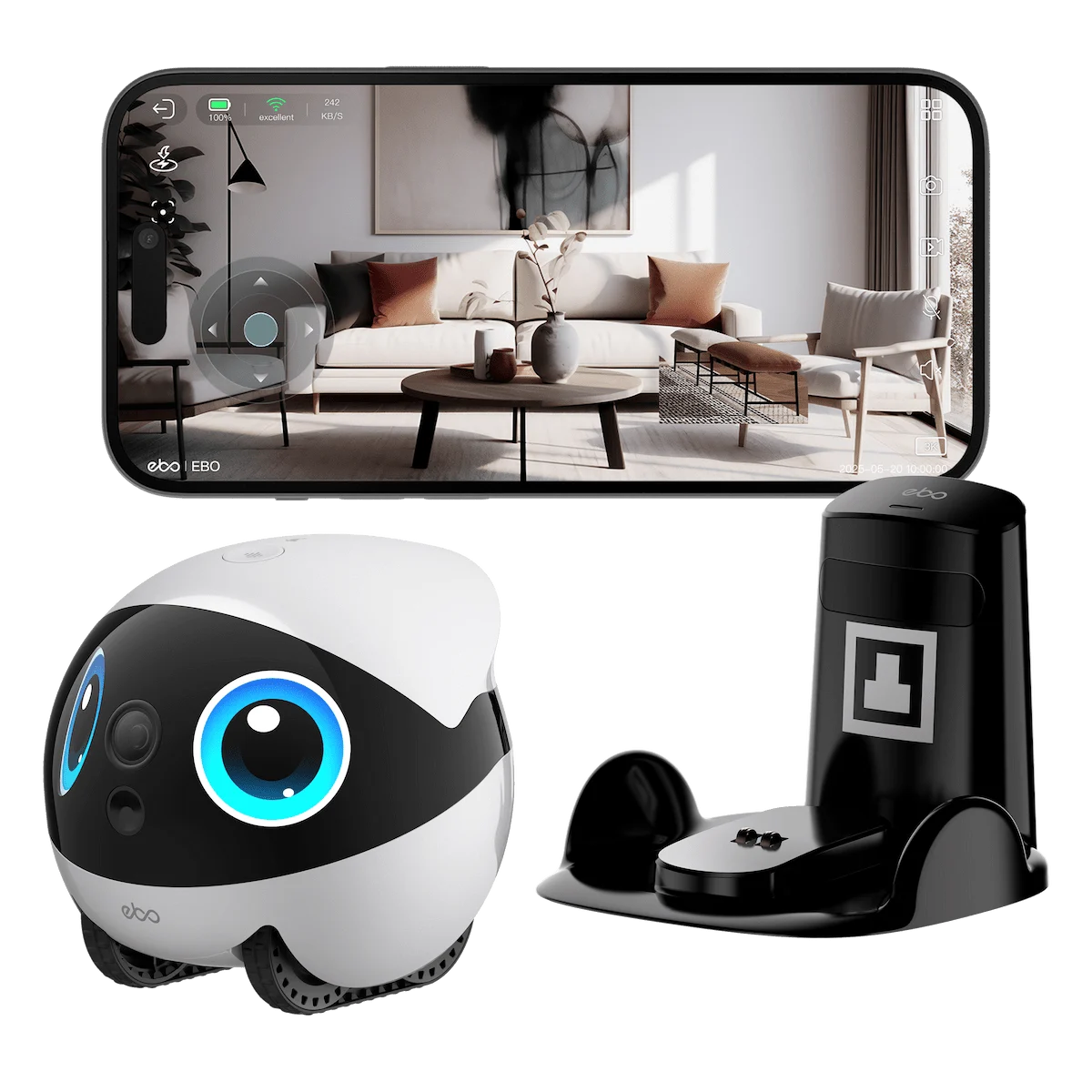 EBO Air 2 Plus FamilyBot — read review
EBO Air 2 Plus FamilyBot
A 3K two-way video companion robot with an interactive AI assistant, expressive dual-screen eyes, and scheduled smart patrol.
PAUL10% off